07775 853 348

WINTER SKILLS COURSE in SCOTLAND: Learn to Move Safely in the Scottish Mountains
A winter skills course in Scotland is an excellent way to develop the knowledge, confidence and practical skills needed to enjoy the mountains during the winter months. Whether you’re a hill walker looking to progress into winter conditions or an aspiring mountaineer wanting to develop your technical skills, a winter skills course will help you prepare for your next adventure.
WHY BOOK A WINTER SKILLS COURSE in SCOTLAND?
Scottish winter mountain conditions can change rapidly. A clear morning can quickly turn into a day of poor visibility, strong winds, falling temperatures and challenging snow conditions. Understanding how to respond to these changes is an essential part of winter mountaineering.
A winter skills course provides practical experience in real mountain environments, helping you develop the skills to make better decisions, manage risk and move efficiently across snow-covered terrain.
Rather than simply following an instructor, you’ll learn the reasoning behind the techniques you practise. This helps you become a more independent and confident mountaineer, capable of applying your skills on future trips.
Whether your goal is to enjoy winter hill walking, tackle more challenging mountain routes or eventually progress into winter climbing, developing a solid foundation of winter skills is an important first step.
WHAT WILL YOU LEARN on a WINTER SKILLS COURSE?
A good winter skills course in Scotland combines practical training with an understanding of the mountain environment. The exact content will depend on the weather, snow conditions, terrain and experience of the group, but there are several essential skills to develop.
ICE AXE SKILLS and SNOW TRAVEL
Learning how to use an ice axe correctly is fundamental to travelling safely on snow-covered mountains. You’ll practise carrying and holding an ice axe, using it for balance and support, and moving efficiently across different types of snowy terrain.
An important part of winter skills training is learning ice axe arrest techniques. These techniques are designed to help you respond if you slip on a snow slope. You’ll also learn about the limitations of self-arrest and why choosing appropriate terrain, maintaining balance and avoiding a slip in the first place remain so important.
CRAMPON TECHNIQUE
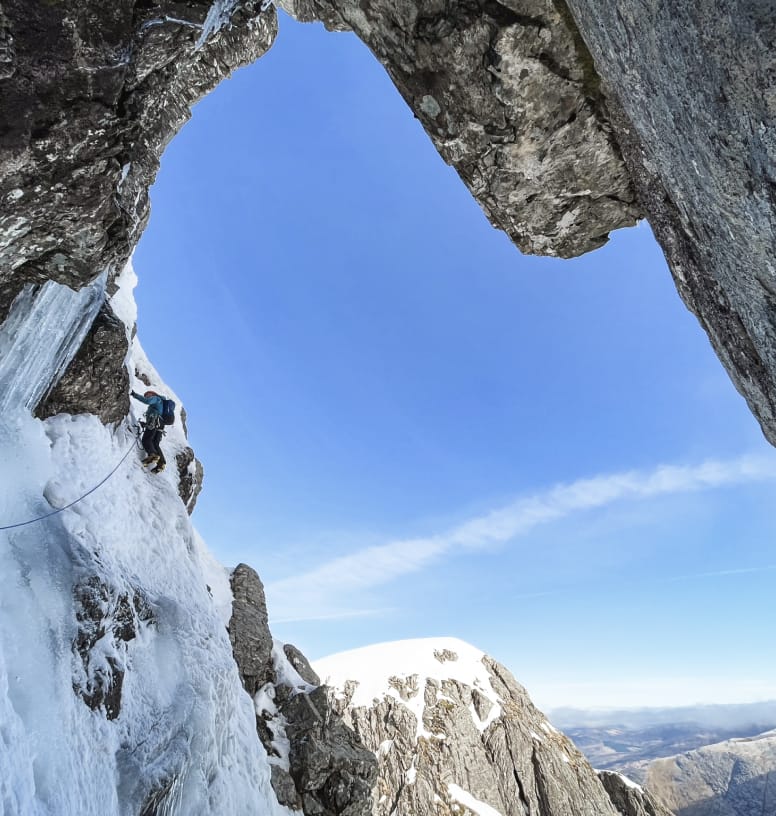
Crampons provide additional grip when travelling over hard snow and ice, but using them effectively requires practice.
During crampon training, you’ll learn footwork techniques that help you maintain good contact with the snow while reducing the risk of catching a crampon point on your clothing or the opposite leg.
You’ll practise moving uphill, downhill and across slopes, developing the coordination needed to travel efficiently and confidently. You’ll also learn how to recognise when crampons are appropriate and how to use them alongside an ice axe.
NAVIGATION in WINTER CONDITIONS
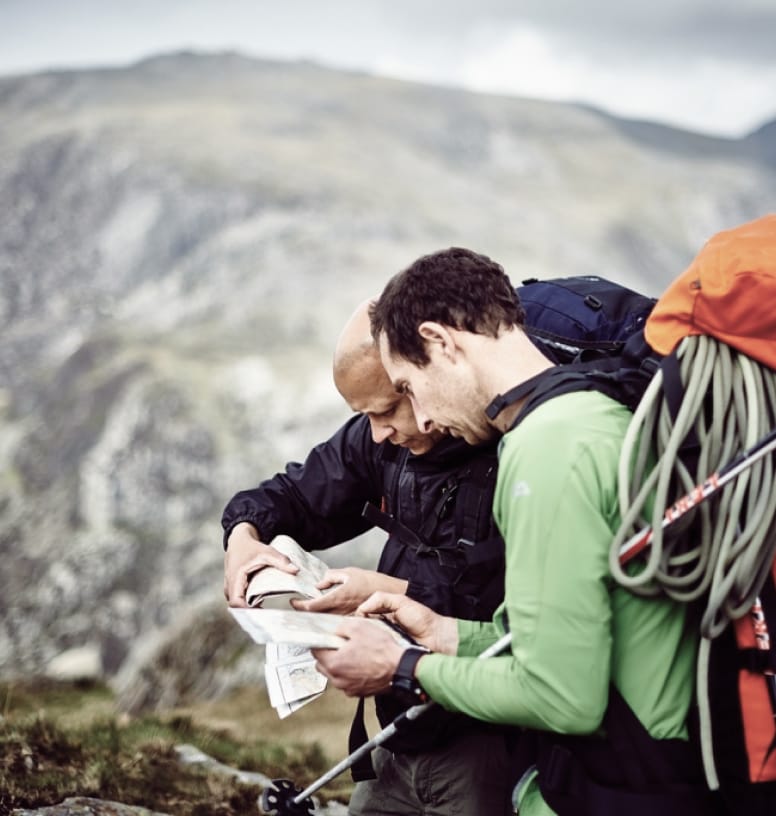
Navigation becomes particularly challenging when snow covers familiar paths, landmarks disappear in cloud and visibility deteriorates.
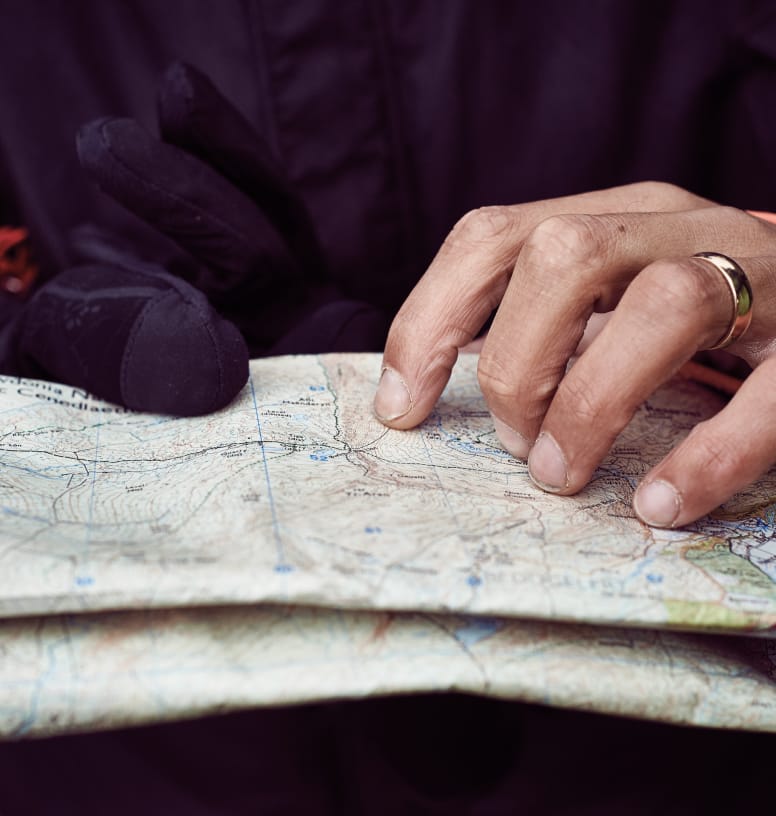
A winter skills course will help you develop your map and compass skills, including taking bearings, estimating distances and identifying suitable features to navigate towards.
You’ll also explore how to make navigation decisions when visibility is poor and how to use your map, compass and other navigation tools together.
Good navigation isn’t just about knowing where you are. It’s about understanding where you need to go, recognising when your plan needs to change and knowing when it is safer to turn around.